Licensed Level 6 Behavioral Home · 6 Beds / 6 Clients · Ambulatory, Ages 18–59 · Lake Elsinore, CA
Where structure meets genuine care.
A licensed Level 6 behavioral home for six ambulatory adults ages 18–59 living with developmental disabilities — autism, intellectual disability, and co-occurring conditions. We provide ABA-integrated behavioral support, positive behavior interventions, and IPP-aligned daily living skill development — open to private-pay families, Medi-Cal, long-term care insurance, special needs trusts, and Regional Center coordination.
Soleil Levant Care was founded on the belief that adults with developmental disabilities deserve more than placement — they deserve a home where progress is built into every single day.
We are a licensed Level 6 ARF in Lake Elsinore, California. Our small, home-like setting means every resident is known by name, supported by consistent staff, and guided by an individualized program plan that evolves as they grow.
Licensed & Active — California Adult Residential Facility License #335530548. Level 6 behavioral home · 6 beds / 6 clients · ambulatory, ages 18–59 · Title 22 compliant. Pending vendorization with Inland Regional Center (IRC).
True Home Setting
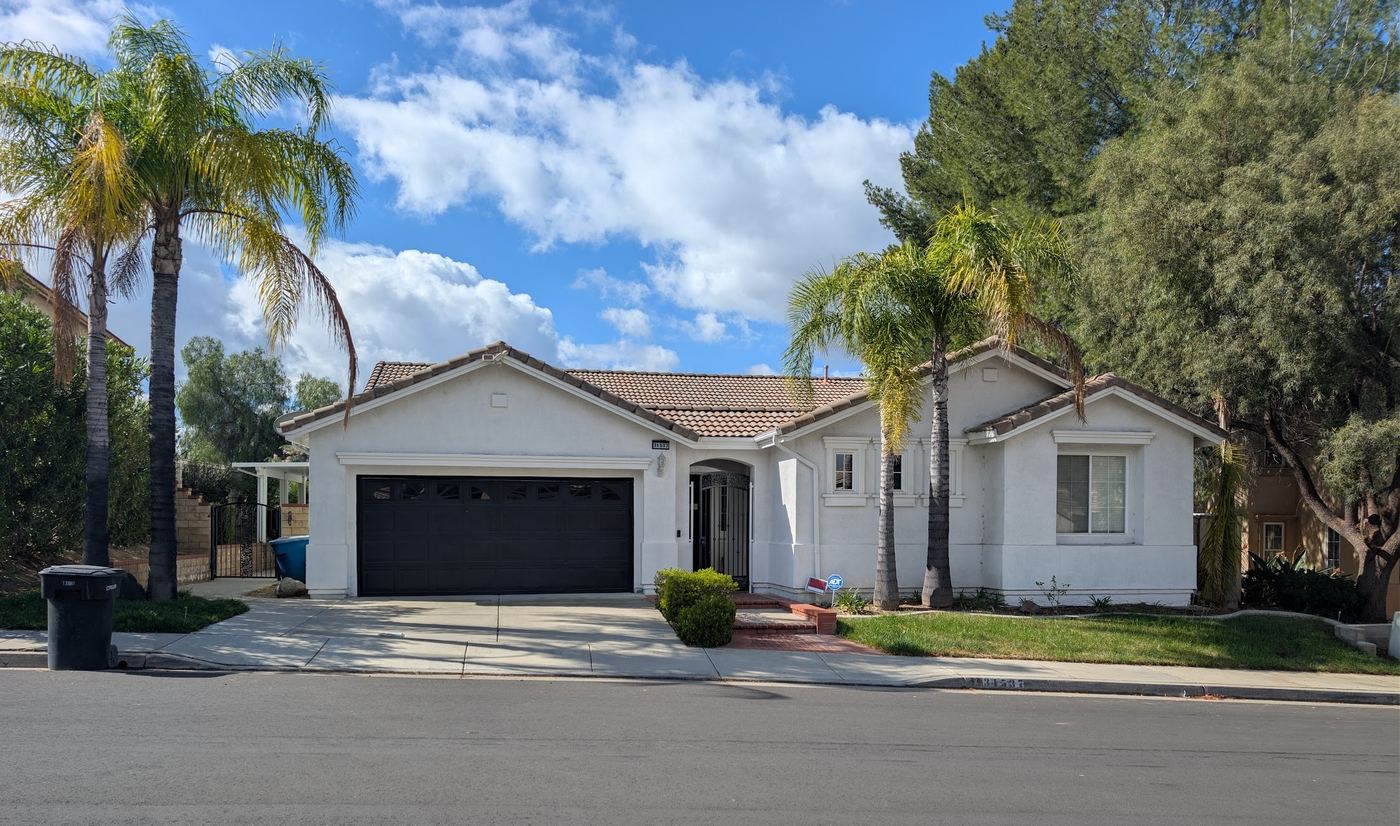
A real neighborhood home — never clinical, never institutional.
Low Staff Ratio
Fewer residents means deeper relationships and better outcomes.
Multiple Funding Options
Medi-Cal, private pay, long-term care insurance, special needs trusts, and Regional Center coordination all accepted.
Consistent Structure
Predictable routines that anchor behavioral growth and daily confidence.
Our Approach
Behavioral support built into every single day.
Soleil Levant Care is a Level 6 behavioral home — and that means behavior support isn't a separate program. It's embedded in every meal, every activity, every transition. Residents don't just live here. They practice life here.
We don't just reduce difficult behaviors. We replace them with functional skills that carry outside these walls: into day programs, communities, and eventually toward greater independence.
01
Hands-On Skill Building
Baking, gardening, and community micro-enterprise work build real competencies — communication, financial literacy, and emotional regulation — through practice, not theory.
02
Real-World Adaptability
Residents practice handling schedule changes, rotating staff, and public situations — because resilience is built by facing real challenges, not avoiding them.
03
IPP-Aligned Programming
Every resident's program plan drives daily decisions. We work closely with families and service coordinators to ensure our approach matches each person's goals.
04
Functional Independence
The measure of our work isn't a quiet house — it's a resident who can navigate their world with more confidence than the day they arrived.
For Case Managers & Referring Clinicians
What clinicians need to make a confident placement decision.
We partner closely with BCBAs, hospital discharge planners, and private clinicians making residential placements. Everything below is what you should expect — and what we deliver, consistently.
Level 6 is a crisis-level behavioral designation under the DDS residential rate framework, and it is staffed accordingly — 1:1 and 2:1 support as each resident's Individual Program Plan requires, with awake staff through the night. That is a different order of supervision than a standard residential placement: a resident who needs constant line-of-sight, or two staff for safe response, gets it here rather than being turned away. No shared shifts with forty other residents. Real supervision, all night.
Applied Behavior Analysis — Integrated, Not Scheduled
ABA principles are embedded into every meal, every transition, and every community outing — not delivered as isolated therapy sessions. Antecedent-behavior-consequence analysis shapes every staff interaction, all day long.
Positive Behavior Support & BSP Implementation
We implement individualized Behavior Support Plans developed in collaboration with your BCBA team. Proactive strategies, environmental modifications, and functional skill replacement — reducing reactive interventions through consistent daily structure.
Documentation You Can Count On
Monthly progress notes, incident reports (per Title 22 §87211), behavioral data logs, medication administration records (MAR), and daily activity logs — maintained accurately and available to referring clinicians upon request. No chasing paperwork.
Full Title 22 Compliance — Licensed, Inspected & Committed to Compliance
California-licensed Level 6 ARF committed to maintaining full compliance with Title 22 requirements. Our home includes dual-locked medication storage, an accessible bathroom with transfer bench and grab bars, a dedicated visitor/staff restroom, secured exterior storage, and staff credentials posted at the front entrance. Required inspections are part of our ongoing regulatory oversight, and we maintain compliance year-round—not only when an inspection is scheduled.
Direct Administrator Access & Family Communication
Stephanie Leary answers her own phone — call (951) 245-3504. We provide monthly progress notes, behavioral data logs, incident reports (per Title 22 §87211), and MAR documentation. Families receive regular updates, can visit any time, and are always welcome at care planning meetings. Open-door policy — no surprises, ever.
Single-Story Home Built for Access & Least-Restrictive Placement
No stairs anywhere — residents using a walker can move throughout the home and access the yard step-free, with ground-level evacuation from every room. No more than two residents share a bedroom, with each resident having their own bed, storage, and the opportunity to personalize their space. Every resident toilet is located in its own enclosed compartment and includes a bidet to support independence with personal care.
The home provides a safe, open residential environment without locked doors or restrictive security measures. Supervision and support are individualized according to each resident’s IPP, allowing residents the greatest level of independence while maintaining their health and safety.
A Level 6 Behavioral Home — Staffed and Trained for Complex Needs
Level 6 is a behavioral designation, and we built the program around it. This is a home for adults whose behavioral needs are significant enough that most settings can't support them — severe disruptive behavior, self-injury, aggression, elopement risk, and the complex presentations that often follow a hospital or crisis placement. Staff are trained on each resident's individual Behavior Support Plan before they ever work with that resident, and on de-escalation and safe response to challenging behavior as a condition of working here — not as an optional in-service.
Ongoing Training & Clinical Consultation — Not Just Onboarding
Every team member completes ARF Core Knowledge, CPR, First Aid, medication management, and Mandated Reporter certification before their first shift. Training continues from there. Our consulting BCBA leads regular staff training on behavior-analytic technique, accurate data collection, antecedent strategies, and safe response — with refreshers whenever a Behavior Support Plan is revised or a new resident transitions in. We track regulatory updates from CDSS and DDS so staff practice reflects current Title 22 and Title 17 requirements, not whatever was in force the year they were hired.
Honest About Fit — Before Placement, Not After
We accept residents whose needs we are genuinely staffed and trained to meet, and we tell you during assessment if we're not the right home rather than discovering it after move-in. For a discharge planner or service coordinator, that means fewer failed placements and no emergency call three weeks later. When we say yes to a referral, it's because we've reviewed the behavioral history, the BSP, and the support requirements, and we know we can deliver them.
What We Provide
Everything your family member needs, every day.
Personal Care Assistance
Daily personal care delivered with consistency, dignity, and respect for each resident's individual routines and preferences.
Nutrition & Meal Preparation
Three home-cooked meals daily prepared in our full-size kitchen with island, supporting healthy routines and building meal-preparation skills as part of daily living training.
Medication Management
Staff support residents with prescribed medication routines in accordance with their IPP and ARF regulations.
Skill-Building Activities
Baking, gardening, micro-enterprise tasks, and community outings that reinforce behavioral goals and build real-world competency.
Safe, Structured Housing
Private and semi-private rooms with 24-hour awake staff supervision and emergency response protocols.
Family & Regional Center Communication
Regular updates, IPP meetings, and open communication with families and service coordinators throughout the resident's program.
A Typical Day
Structure that builds confidence. Flexibility that builds independence.
Predictable routines provide structure, familiarity, and opportunities for success, but life does not always follow a schedule. At Soleil Levant Care, each individual has a personalized daily schedule designed around their needs, preferences, and goals — while allowing flexibility when plans change. We use everyday opportunities to help individuals build the skills to adjust, cope, problem-solve, and move through life’s unexpected moments with greater independence. The goal is not to confine someone to a routine, but to give them the skills and confidence to thrive within it — and adapt when life takes a different direction.
5:30 AM
Wake-up with personal care assistance and morning hygiene routines.
6:30 AM
Home-cooked breakfast together in the dining room.
7:30 AM
Getting ready for the day program — dressing, grooming, and departure preparation.
8:30 AM
Departure for day program — structured activities, social engagement, and skill-building.
3:00 PM
Return from day program — decompression, snacks, and transitional activities.
6:00 PM
Home-cooked dinner, followed by life skills practice and independent leisure.
8:30 PM
Evening personal care, medication support, and consistent bedtime routines.
Why Families Choose Us
This is not a facility. It's a home.
Unlike large institutional facilities, our intimate setting means every resident builds real relationships with the people supporting them — not a rotating cast of strangers.
Puzzle-piece autism awareness décor. The Serenity Prayer at the entrance. Individually themed bedrooms. Plantation shutters. A marble dining table. A covered pergola with string lights. Every detail signals that we thought about the people who live here.
Level 6 Staffing Intensity
1:1 and 2:1 support as each resident's IPP requires, with awake staff overnight — the staffing level a crisis-level behavioral designation calls for. Fewer residents and more staff means deeper relationships and better behavioral outcomes.
Individualized Program Plans
Every resident's IPP drives our approach — developed with families, reviewed regularly, and adjusted as needs evolve.
Culturally Responsive Care
We honor each resident's background, communication style, and identity — because person-centered care means seeing the whole person.
What You'll Notice When You Visit
Details that show how much we care.
🧩
Autism Awareness Throughout
Puzzle-piece décor displayed proudly in our common areas — a visible commitment to autism awareness and neurodiversity that residents and families notice from the moment they walk in.
🙏
Values-Based Environment
The Serenity Prayer adorns our front entrance wall — "God grant me the serenity… courage… wisdom" — setting the tone for a calm, grounded, and intentional living environment.
📋
Professional Administration
A dedicated admin workspace with organized binders, bulletin boards, and scheduling boards — because professional documentation and program management are part of quality care.
✨
Premium Home Finishes
Hardwood floors, plantation shutters, a marble dining table, stone fireplace with custom built-in cabinetry, recessed lighting, full appliance kitchen, and a pergola with string lights — every finish reflects our care standards.
🎨
Individually Themed Bedrooms
Each bedroom is uniquely decorated — birds, butterflies, nature motifs — personalized to feel like a resident's own space. A "How Lucky Are We" poster says it best: every resident is a gift, not a placement.
🔒
Secured Medication Storage
Dual-locked medication cabinet (upper and lower) per Title 22 §87465 — with accurate Medication Administration Records (MAR) maintained daily. All staff are medication-trained. Records are available to referring clinicians and families upon request.
🏠
Single-Story, Step-Free Throughout
No stairs anywhere in the home. Residents using a walker, or simply unsteady on their feet, move through every room and out to the yard without a single step — and evacuation is ground-level from every room, not down a staircase.
♿
Accessible Bathrooms
A soaking tub, a separate walk-in shower with transfer bench and grab bars, wide tile flooring with room to turn, and plantation shutters for privacy. Every resident toilet sits in its own enclosed compartment and is fitted with a bidet — not required by Title 22, added because it moves residents from dependent to semi-independent in personal care.
📜
Credentials On Display
Stephanie's professional certifications and facility credentials are displayed proudly at the entrance alongside decorative shelves with plants — open, transparent, and welcoming from the first step in.
🚨
Emergency Preparedness
Combination smoke and carbon monoxide detectors in every room — bedrooms, hallway, kitchen and dining, family room and office — all hard-wired with battery backup. Plus posted evacuation plans, a 72-hour emergency supply kit, documented fire drill records, illuminated exit signage, fire extinguishers in plain sight, and staff trained in CPR, First Aid, and ARF emergency protocols — all per Title 22 requirements and California CDSS licensing standards.
🔍
Staff Background & Certification
Every team member passes DOJ and FBI background checks (Live Scan), and holds current CPR and First Aid certifications. Staff complete ARF Core Knowledge training, medication management, and Mandated Reporter certification before first shift.
📅
Organized Program Management
Scheduling boards, bulletin boards, organized binders, and a dedicated activity table with cane-back chairs — visible proof that behind every resident's day is a well-managed, documented care program.
Who We Serve
Clear criteria, before you refer.
Our state license defines exactly who we can accept, and we would rather you know that up front than discover it partway through a referral. Soleil Levant Care is licensed as a Level 6 behavioral home for six ambulatory adults, ages 18 through 59, under California license #335530548. Vendorization with Inland Regional Center (IRC) is pending.
“Ambulatory” means a resident can walk and leave the building on their own in an emergency, with or without a walker or cane. It is a fire-and-life-safety classification, not a judgment about someone’s abilities.
You can verify our license any time through the CDSS Care Facility Search — search license #335530548.
01
Adults ages 18–59
Our license covers this age range. Younger adults transitioning out of school-based or children’s programs are a common and welcome referral.
02
Ambulatory
Able to walk and exit the home independently, including with a walker or cane. Step-free access throughout means an unsteady resident still moves through the whole house without a single stair.
03
Level 6 behavioral needs
Severe disruptive behavior, self-injury, aggression, elopement risk, and complex presentations following a hospital or crisis placement. This is what the home is staffed and trained for.
04
Developmental disabilities
Autism, intellectual disability, and co-occurring diagnoses, with an IPP and a Behavior Support Plan we can build the daily program around.
05
What we cannot accept
Non-ambulatory residents, anyone requiring skilled nursing or a hospital level of medical care, and adults outside the 18–59 age range. If a referral falls outside our license, we will tell you during assessment rather than after move-in.
Funding & Referral Options
Multiple paths to placement.
We welcome residents from a variety of referral sources, including hospital discharge planners, private case managers, and families navigating care directly. We accept Medi-Cal, private pay, long-term care insurance, and special needs trusts. Vendorization with Inland Regional Center (IRC) is pending; for Regional Center clients, we're happy to coordinate with an existing service coordinator to support a smooth transition.
Contact us directly to have a confidential conversation about your family member's needs, current availability, and what a placement would look like. There is no pressure and no obligation — just an honest conversation.
We accept Medi-Cal funded placements and work directly with hospital discharge planners and clinical teams to arrange smooth, well-supported transitions into our home.
02
Private Out-of-Pocket
Families may pay directly for residential care. Rates are discussed privately and transparently — contact us to learn about current availability and monthly program costs.
03
Long-Term Care Insurance
Many long-term care insurance policies cover licensed residential care facilities at the Level 6 classification. We provide the documentation and letters of medical necessity your insurer requires.
04
Special Needs Trusts
Families with special needs trusts or ABLE accounts established for their loved one may use those funds to cover residential care costs. We work with trust administrators directly.
05
Regional Center Coordination
Vendorization with Inland Regional Center (IRC) is pending. In the meantime, we welcome private-pay, Medi-Cal, and insurance-funded placements, and we're glad to coordinate directly with a family's existing Regional Center service coordinator to support a smooth placement and align with IPP goals. Once IRC vendorization is approved, we will update this page.
Get in Touch
Begin the conversation.
Every family we speak with arrives with questions, concerns, and hope. We take every conversation seriously, answer every question honestly, and never rush the process. Call us or send a message — we respond personally.
Program updates, community events, and guidance for families navigating ARF placement.
Soleil Levant Care LLC is a Level 6 Adult Residential Facility (ARF) in Lake Elsinore California. We accept Medi-Cal, private pay, long-term care insurance, and special needs trusts, and coordinate directly with Regional Center service coordinators, hospital discharge planners, and private case managers. We serve adults with developmental disabilities, autism spectrum disorder, intellectual disabilities, behavioral challenges, and special needs. Services include Level 6 behavioral support, structured residential care, IPP-aligned programming, independent living skills training, daily living skills, emotional regulation, social skills development, community integration, day program coordination, micro-enterprise activities, and 24-hour awake staff supervision. Located in Lake Elsinore Riverside County Inland Empire Southern California. We serve clients from Temecula Murrieta Menifee Perris Hemet San Bernardino Los Angeles Orange County. Title 22 compliant ARF, California Department of Developmental Services. , residential placement California supported residential care California, DDS Department of Developmental Services, autism residential care California, intellectual disability home California, ABA therapy home support, behavior intervention residential, adult group home developmental disability, transition-age adult home California, Regional Center funded home, residential placement autism adult, structured residential care adults California, 24-hour care adults California, Soleil Levant Care LLC Lake Elsinore, ARF Riverside County California, behavioral health home California, adult residential facility Riverside County, Rancho Regional Center, Valley Mountain Regional Center, North Bay Regional Center, Redwood Coast Regional Center, Far Northern Regional Center, Alta California Regional Center, special needs group home California, life skills training adults California, home for adults with disabilities California, residential care adults behavioral support, Level 6 ARF Inland Empire